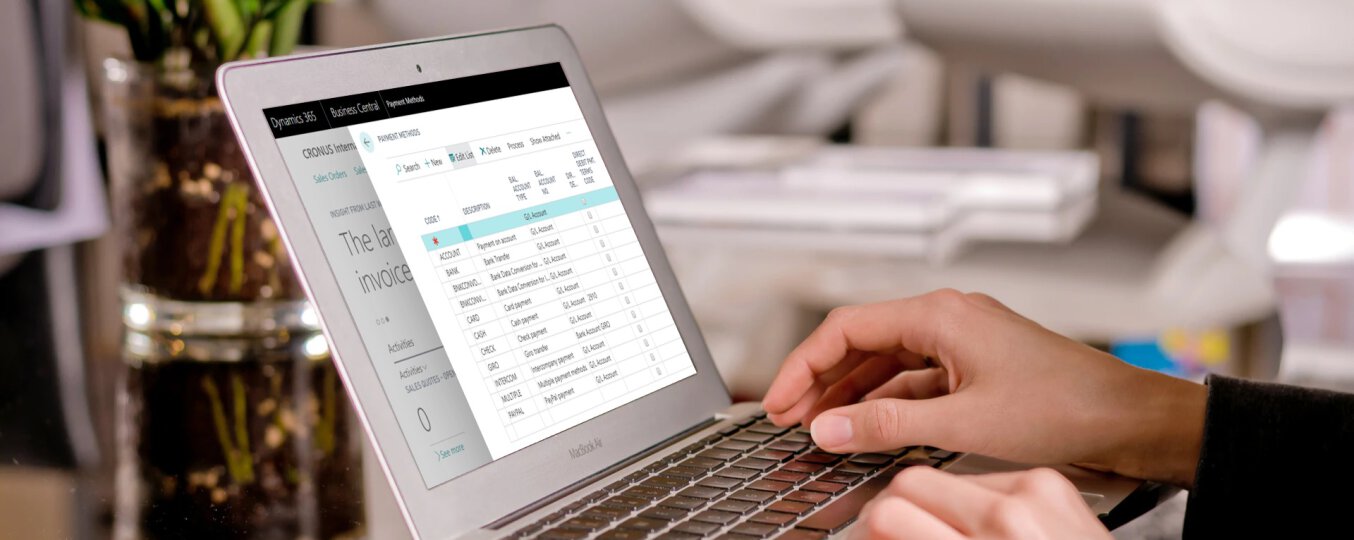
When considering the implementation of a modern ERP system, you need to go through a certain decision-making process. Of course, there is no unambiguous pattern describing how organizations decide to change their ERP solution. Nevertheless, several stages can be defined, which usually bring companies closer to making a decision to change the solutions they use. To meet this, in this article we present how to get closer to changing the ERP platform in 5 steps.
In order to identify the limitations of the current system, it is possible to determine which processes could be performed more efficiently. Find and clearly define the constraints that prevent you from working productively.
In addition, it is worth checking whether the current ERP system is flexible enough to meet the growing needs of the organization. A flexible ERP system should be able to handle new employees, customers and business processes.
Many companies feel that they need to completely rebuild their existing processes, getting rid of the systems and applications they used to use. It is worth knowing that sometimes this is not the rule. Thanks to integrations, the ERP system can be the sum of many applications and various IT solutions.
Modern ERP systems, unlike older solutions, are distinguished by a modern and intuitive user interface. The platform should be built in such a way as to support productive work.
It is also very important to be able to integrate with external applications. For example, in the case of Business Central, it is possible through add-on, API or web-services.
You need to find out on which devices the new solution will be available. For example, Business Central is available in the form of a web application, a desktop program (Windows) or an application for mobile devices (Android and iOS).
What distinguishes a modern ERP system is also the approach to network infrastructure. Currently, a clear trend is that modern ERP solutions are hosted in the cloud in the form of SaaS applications.
A modern ERP system should effectively use the potential of modern technologies. That is why Microsoft engineers are working to ensure that the Microsoft Dynamics system uses modern solutions (e.g. AI, LLM, machine learning, etc.).
An effectively operating ERP system should combine various areas of the company. Microsoft Dynamics 365 Business Central is a comprehensive business solution that includes management of finances, sales and purchases, warehouse, production and customer relations. Sometimes the old ERP system covers only selected areas of the company, which is a limitation for effective management of processes between different departments (e.g. communication between the accounting department and the production department). Therefore, when planning the implementation of a new solution, it is worth trying to integrate various areas of activity into one coherent system.
Based on Dynamics 365 Business Central, the company’s business areas can be divided into the following modules:
Implementing a new ERP system can seem like an overwhelmingly complex task. Therefore, it is worth asking the partner who will be responsible for the implementation for help in explaining how to go through this process. You can start with the following three steps:
The most important part of implementing a new system is choosing a technology partner. As you know, choosing the right partner has a key impact on the success of the entire project. When choosing a partner, it is worth paying attention to at least the following questions:
Would you like to learn more? Let's get in touch.
Sending...